
Choosing the Right Motor Control for Your Application
Starter vs. Soft Starter vs. VFD
Electric motors are used across industrial, commercial, and HVAC applications, but not every motor should be controlled the same way. The way a motor starts, stops, and operates can affect equipment life, energy use, mechanical wear, and overall system reliability.
At Dreisilker Electric Motors, we offer three main levels of motor control: Starters, soft starters, and variable frequency drives (VFDs).
Each option provides a different level of control. A starter provides basic on/off motor control. A soft starter adds controlled acceleration and deceleration. A VFD provides the highest level of control by adjusting motor speed and torque throughout operation.
Choosing the right option depends on the motor, the load, the application, and the level of control required.
Why Motor Control Selection Matters:
When an electric motor starts, it can draw significantly more current than it uses during normal operation. In many across-the-line starter applications, inrush current can be several times higher than the motor’s normal full-load current. Our motor starter guide notes that full-voltage starting can produce an inrush current of 6 to 12 times the motor’s full load current.
That starting current can create stress on the electrical system. It can also create mechanical shock on the driven equipment, including belts, couplings, gearboxes, pumps, compressors, fans, and conveyors.
The goal of motor control is not just to turn a motor on and off – the right control method helps protect the motor, reduce unnecessary stress, support reliable operation, and improve overall system performance.
Level 1: Motor Starters
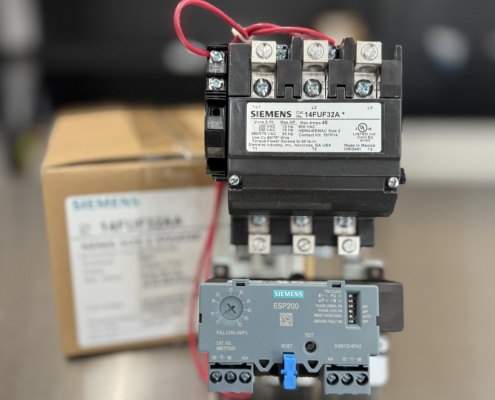
A motor starter is the most basic motor control option. It starts and stops the motor while providing overload protection. A typical starter includes a contactor and an overload relay. The contactor opens and closes the electrical circuit to the motor, while the overload relay helps protect the motor from excessive current.
Our Blog on motor controls explains that starters, contactors, overloads, and disconnects work together to start the motor, monitor current, protect the motor, and isolate power for maintenance.
Motor starters are commonly used when an application does not require reduced starting current, controlled acceleration, or variable speed operation. They are often a practical choice for basic applications where the motor starts infrequently and the driven equipment can handle full-voltage starting.
Benefits of Motor Starters
Motor starters are simple, reliable, and cost-effective. They are generally easier to install and troubleshoot than more advanced electronic controls. For many basic applications, a starter provides the necessary motor control and protection without adding unnecessary complexity.
Limitations of Motor Starters
The main limitation of a standard starters is that it applies full voltage immediately. This creates the highest level of starting current and starting torque compared to a soft starter or VFD.
For larger motors, frequent starts, high-inertia loads, or equipment with sensitive mechanical components, a starter may not provide enough control. In those cases, a soft starter or VFD may be a better option.
Level 2: Soft Starters
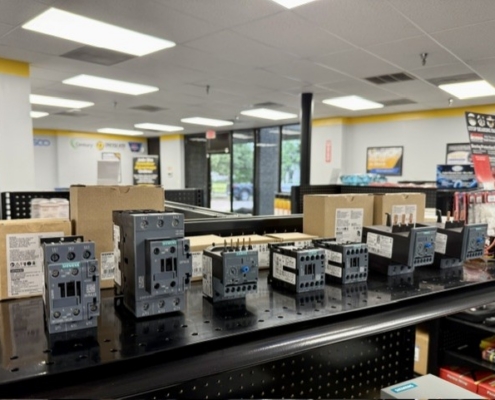
A soft starter is the next level of motor control. Instead of applying full voltage instantly, a soft starter gradually ramps voltage to the motor during startup. This reduces starting current and starting torque, helping the motor and connected equipment start more smoothly.
Siemens describes its SIRIUS soft starters as a solution for soft starting and stopping three-phase motors, helping reduce mechanical stress and voltage dips in the power supply system.
A soft starter is a good fit when the motor does not need variable speed control but does need a smoother start or stop. Once the motor reaches full speed, it typically runs at normal line speed.
Benefits of Soft Starters
Soft starters reduce the mechanical shock that occurs when a motor starts. This can help protect connected components such as belts, bearings, couplings, chains, gearboxes, and pump systems.
Soft starters can also help reduce voltage dips caused by motor startup. This is especially useful in facilities where large motors starting across the line may affect other equipment on the same electrical system.
For pump applications, soft starters can also help reduce the pressure surge that occurs when a pump starts or stop by controlling acceleration and deceleration.
Limitations of Soft Starters
A soft starter controls the start and stop of the motor, but it does not provide continuous speed control during normal operation. Once the motor is up to speed, it generally runs at full speed.
If the application requires speed adjustment, process control, energy savings from reduced speed, or advanced motor diagnostics, a VFD is usually the better choice.
Level 3: Variable Frequency Drives
A variable frequency drive, or VFD, provides the highest level of motor control. A VFD controls both the voltage and frequency supplied to the motor, allowing the motor speed to be adjusted based on the needs of the application.
Our VFD basics article explains that a VFD changes motor speed by changing the frequency supplied to the motor. For example, a drive receiving 60 Hz power can output a lower frequency to run the motor at a slower speed.
This makes VFDs especially useful for applications where the motor does not need to run at full speed continuously. It’s also worth noting that VFDs have come down significantly in cost over the years. In many cases today, a VFD may cost the same or less than a soft starter, and offers considerably more flexibility
Benefits of VFDs
VFDs offer the most complete control of the three options. They can control motor speed, acceleration, deceleration, and torque. This allows the motor to better match the actual demand of the system.
For pumps and fans, VFDs can provide significant energy savings, as power consumption decreases dramatically when motor speed is reduced. Our VFD Blog notes that reducing motor speed by 20% can reduce power consumption by approximately 50% in pump and fan applications.
VFDs can also improve process control. Instead of using dampers, valves, or mechanical throttling methods to control flow, the drive can adjust the motor speed directly. This can reduce wasted energy and improve system performance.
Additional VFD benefits include smooth acceleration and deceleration, adjustable motor speed, reduced mechanical stress, built-in diagnostics, fault history, communication with automation systems, and advanced motor protection features.
Yaskawa’s GA800 drive, for example, is designed for flexibility, motor control performance, network communication, and functional safety across a broad horsepower range.
Important VFD Considerations
VFDs have more installation requirements than starters or soft starters. Here’s what needs to be considered. The application, motor horsepower, voltage, load type, enclosure rating, cable length, environment, grounding, programming, and protection requirements all matter.
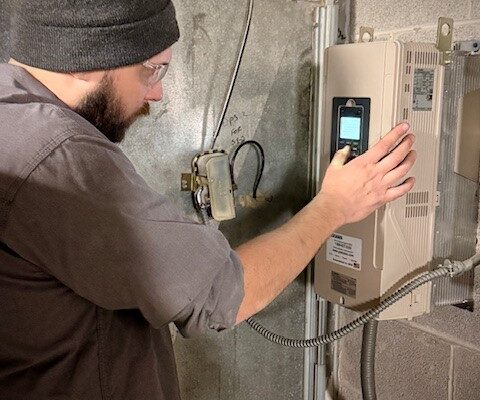
VFDs can also create motor-related issues if the system is not properly protected. Our VFD article explains that damaging currents can pass through motor bearings and lead to bearing pitting, fluting, frosting, lubrication breakdown, and premature bearing failure.
Depending on the application, a VFD installation may require additional protection such as shaft grounding, proper motor cabling, reactors, filters, or other protective components. Routine maintenance, such as cleaning the drive’s heatsink annually and checking connection tightness, can go a long way toward reaching a VFD’s expected lifespan of around 12 years.
This is one reason it is important to work with a team that understands both the drive and the motor.
Common Applications by Motor Control Type
| Application | Starter | Soft Starter | VFD |
|---|---|---|---|
| Pumps | Yes | Yes | Yes |
| Fans | Yes | Yes | Yes |
| Compressors | Yes | Yes | Sometimes |
| Conveyors | Yes | Yes | Yes |
| Blowers | Sometimes | Yes | Yes |
| Cooling Towers | Sometimes | Sometimes | Yes |
| Mixers | Sometimes | Yes | Yes |
| HVAC Systems | Yes | Yes | Yes |
| Process Equipment | Sometimes | Sometimes | Yes |
Yaskawa offers industrial AC drives for a wide range of applications, including applications where the load changes, like fans and pumps.
Siemens also offers the SINAMICS family of drives for a wide range of industrial and infrastructure applications.
Starter vs. Soft Starter vs. VFD: Quick Comparison
| Motor Control Type | Primary Purpose | Speed Control | Starting Stress | Best Fit |
| Starter | Basic start/stop and overload protection | No | Highest | Simple applications with infrequent starts |
| Soft Starter | Smooth start and stop | No | Medium | Applications needing reduced mechanical shock |
| VFD | Speed, torque, and process control | Yes | Lowest | Applications needing speed control, energy savings, or advanced control |
How to Choose the Right Motor Control
Choose a starter when the application only needs basic start/stop control and overload protection. This is usually best for simple systems where the motor starts infrequently, and the equipment can tolerate full-voltage starting.
Choose a soft starter when the motor runs at full speed but needs a smoother start or stop. This is a good option for reducing mechanical shock, limiting starting current, and protecting pumps, belts, couplings, and other connected components.
Choose a VFD when the application requires variable speed, energy savings, process control, advanced diagnostics, or tighter control of acceleration and deceleration.
Dreisilker Motor Control Solutions
Chris – Motor and Control Expert
Dreisilker Electric Motors offers motor control solutions for industrial, commercial, and HVAC applications. Our main motor control brands include Yaskawa and Siemens, with options ranging from basic starters and overload protection to soft starters and VFDs.
Our team can help with starter and soft starter selection, VFD sizing and programming, replacement drives, installation support, troubleshooting, field service, motor and drive compatibility reviews, and motor protection recommendations.
We also provide on-site troubleshooting, diagnostics, emergency repairs, and reliability-focused solutions to help customers improve uptime and reduce unexpected downtime.
Conclusion
Starters, soft starters, and VFDs are all motor control solutions, but they provide different levels of control.
A starter is the simplest solution for basic motor starting and stopping. A soft starter builds on this by providing controlled acceleration and deceleration, reducing electrical and mechanical stress. A VFD provides the most advanced control by adjusting motor speed, torque, and performance throughout operation.
The right choice depends on the motor, the application, the load, and the level of control required.
For help selecting, installing, or troubleshooting a motor control solution, contact Dreisilker Electric Motors. Our team can help determine whether a starter, soft starter, or VFD is the right fit for your system.